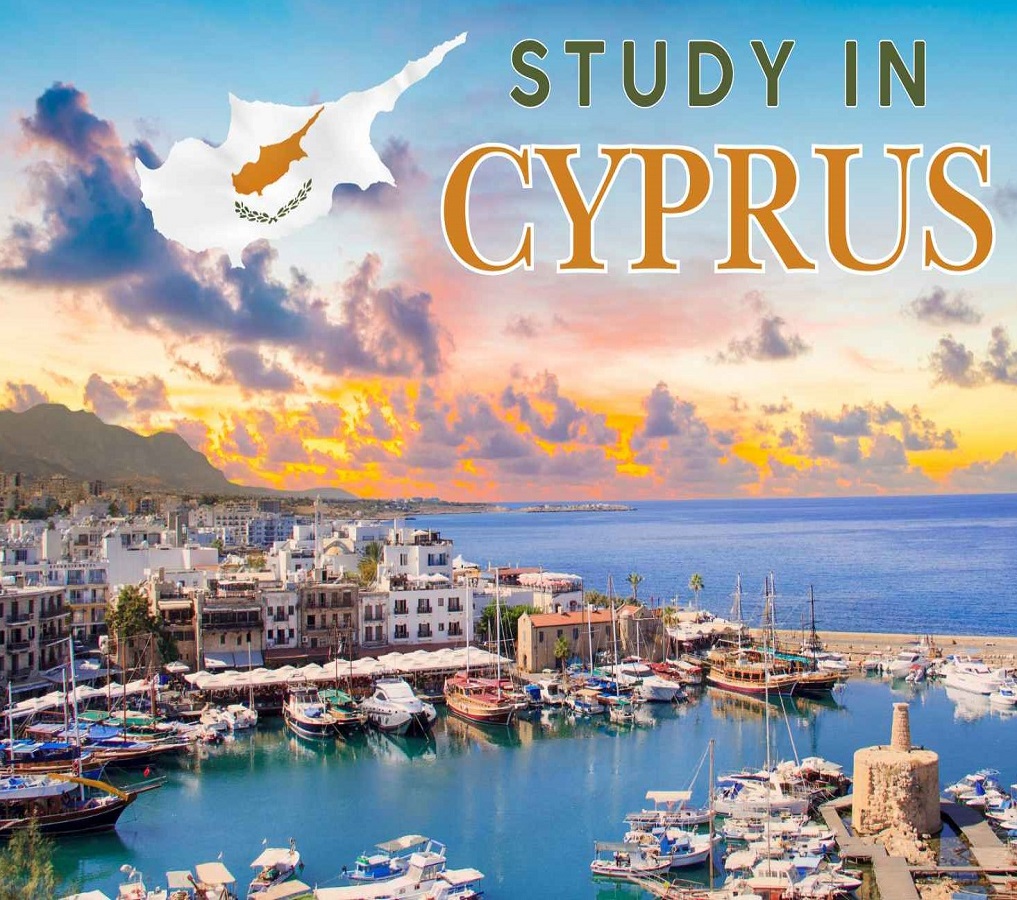
Cyprus
1) Why Cyprus?
- Many English-taught programs — numerous bachelor’s and master’s programs are offered fully in English, so non-Greek speakers can study comfortably.
- Lower cost of study & living (vs UK/Western Europe) — tuition and day-to-day living costs tend to be more affordable than many Western European destinations.
- Short, efficient degree structures — many programs follow the European (Bologna) model with clear bachelor→master progression; professional degrees (medicine, dentistry) available in English.
- EU location & international outlook — Cyprus is geographically at the crossroads of Europe, Asia and the Middle East and is active in Erasmus+, EU research programmes and multinational partnerships.
- Good quality public universities and many private options — you can choose between research-led public universities and specialised private institutions (health, business, IT).
- Growing international student community — campuses host students from many countries, creating multicultural classrooms and support services for internationals.
- Opportunity for professional internships — tourism, shipping, fintech and services sectors offer internship and part-time job options that complement studies.
- Flexible study modes — public and private universities offer full-time, part-time and distance learning (open university) pathways.
2) Top universities in Cyprus
- University of Cyprus (UCY) — Nicosia
- Profile: Cyprus’s flagship public research university; strong in sciences, engineering, social sciences, law and humanities; significant R&D and Erasmus links.
- QS (2025 status): The highest-ranked Cypriot university in QS listings for the period; featured in QS regional listings and continues to appear in QS world rankings in adjacent releases (it is the top Cypriot entry among QS-listed institutions).
- University of Nicosia (UNIC) — Nicosia
- Profile: Largest private university in Cyprus; well known for its English MBBS (medicine), business, IT and flexible/distance learning provision. Strong international student recruitment.
- QS (2025 status): Appears in QS subject/regional listings (QS places UNIC in subject/ranked bands for 2025; it also shows in broader regional lists).
- Cyprus University of Technology (CUT) — Limassol
- Profile: Public technical university with strengths in engineering, architecture, applied sciences and technology transfer to industry.
- QS (2025 status): Appears in QS listings and related global/regional rank bands; recognised regionally for engineering and technology offerings.
- European University Cyprus (EUC) — Nicosia
- Profile: Major private university offering medicine, dentistry, business, law, engineering and professional degrees taught in English; strong professional and clinical links.
- QS (2025 status): Appears within QS subject/regional bands for 2025.
- Frederick University — Nicosia / Limassol
- Profile: Private university focused on applied sciences, engineering, business, design and research partnerships. Recognised locally for impact and industry collaboration.
- QS (2025 status): Present in QS/impact/regional listings and recognized in impact rankings; appears in regional listings in 2025 materials.
- Neapolis University Pafos — Paphos
- Profile: Private university with programs in business, law, engineering and applied sciences; relatively young and growing postgraduate portfolio.
- QS (2025 status): Listed in university-indexing sources and appears in regional/university lists (not in top global QS world numeric bands for 2025).
- University of Central Lancashire Cyprus (UCLan Cyprus)
- Profile: UK branch campus delivering UK-awarded degrees in business, computing, psychology, engineering and more; offers UK curriculum and recognized UK awards.
- QS (2025 status): The parent UK university is present in global QS lists; the Cyprus campus is internationally recognised as the branch campus of a QS-listed UK institution.
- Open University of Cyprus (OUC)
- Profile: Public distance-learning university that provides flexible/part-time undergraduate and postgraduate routes, especially suited to working learners and remote students.
- QS (2025 status): Appears in international academic directories; distance-learning profile is its main strength rather than a conventional QS world ranking position.
- Cyprus International University (CIU) — (Northern Cyprus)
- Profile: Large private university in Northern Cyprus offering many English programs, broad international intake and scholarship schemes.
- QS (2025 status): Active in regional university listings and commonly listed in international university directories (may not be in QS top global numeric bands).
- Eastern Mediterranean University (EMU) — Famagusta (Northern Cyprus)
- Profile: Well-established university offering engineering, medicine, business and a wide portfolio; strong international student base.
- QS (2025 status): Appears in regional/university lists and index resources for 2025.
- Near East University — Nicosia (Northern Cyprus)
- Profile: Large private university with medical, engineering and arts faculties and active international recruitment.
- QS (2025 status): Appears in regional/international listings and university directories used in 2025 material.
3) Popular courses chosen by international students
Undergraduate
- Medicine (MBBS / MD in English) — high demand; offered by several universities on the island.
- Dentistry — professional dental degrees in English at selected private institutions.
- Pharmacy — integrated programmes available at some institutions.
- Business & Management (BBA, Accounting, Finance) — broadly available and popular among internationals.
- Computer Science & IT (Software Engineering, Cybersecurity, Data Science) — rising demand with strong industry links.
- Engineering (Civil, Mechanical, Electrical, Electronic) — staple undergraduate offering at public technical universities and private ones.
- Tourism & Hospitality Management — natural fit due to Cyprus’s tourism economy.
- Nursing & Allied Health Sciences — options for clinical and non-clinical health fields.
- Law — undergraduate legal studies with pathways to postgraduate conversion for other jurisdictions.
Postgraduate
- MBA / MSc in Business & Management — common for career advancement and international students.
- MSc Computer Science / Data Science / AI — high employability and industry demand.
- MSc Engineering & Technology specialisations — civil, mechanical, electronic and environmental engineering master’s.
- MSc Tourism & Hospitality Management — applied programmes with internship links.
- MSc Public Health / Nursing / Health Sciences — for healthcare professionals seeking advanced practice or management roles.
- LLM / Master’s in Law — specialisations and international law tracks.
- MSc Cybersecurity / Information Security — growing demand due to regional skills shortage.
- Master’s in Education / TESOL / Applied Linguistics — for teachers and educational professionals.
- MSc Finance / Accounting / Banking — professional pathway for finance careers.
4) Intakes
- Main (Autumn/Fall) intake: September – October — the primary and largest intake for most programmes (undergraduate and postgraduate).
- Spring intake: January – February — offered by many universities for selected programmes (often limited availability compared with Fall).
- Rolling / multiple intakes: Some private institutions and distance learning programmes run additional intakes (e.g., late Spring/Summer or multiple start dates for certain professional courses).
- Advice: Always check the specific programme’s admissions calendar on the university’s admissions or programme page for exact opening and closing dates.
5) Cost to study in Cyprus (tuition & living)
These are representative ranges. Exact fees depend on university, programme (medical/dental typically at the high end) and whether the university is public or private.
Tuition (annual, approximate)
- Public universities (international/non-EU students): roughly €5,000 – €8,000 per year for many bachelor programmes (some variation by faculty and program). Public postgraduate fees may vary and some professional masters can be higher.
- Private universities (annual): broad range — typically €4,000 – €22,000 per year depending on the programme. Professional degrees (medicine, dentistry) are usually at the higher end. Many private institutions offer scholarships or reduced fees for outstanding applicants.
- Northern Cyprus private universities: headline fees are often competitive and scholarship packages can reduce effective cost significantly.
Living costs (annual, student lifestyle dependent)
- Accommodation (shared student flat or halls): roughly €2,000 – €5,000 per year (shared flats cheaper; private studio/hotel-style living higher).
- Food, transport, utilities, books, other: around €2,000 – €4,000 per year depending on lifestyle and city.
- Total living budget (typical): €4,000 – €8,000 per year as a reasonable estimate for a student living moderately.